
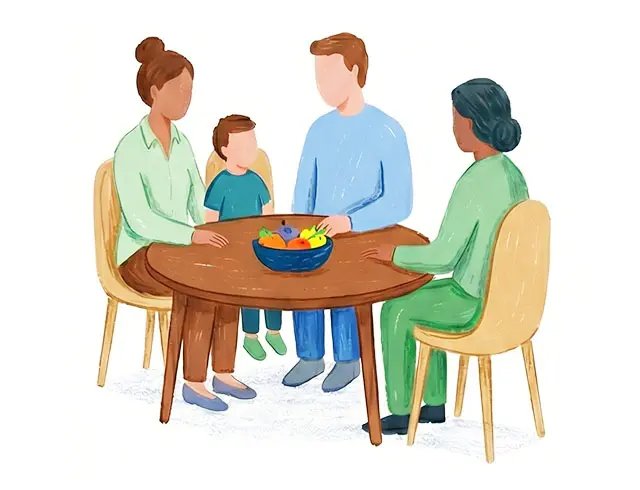
What forms of family therapy are available?
Family therapy involves working with family members together rather than the individual alone. The format depends on who is affected, the difficulties involved, and what the family wishes to achieve.
- Whole-Family Sessions
- Parent Guidance
- Couple Sessions
- Communication Training
- Conflict Resolution
- Carer Support
What is family therapy?
Understanding the therapy
Family therapy helps members understand the difficulties affecting the household, improve communication, and work together toward change. It is useful when one member has a psychiatric illness, or when family conflict itself is the concern. It can help with:
Family therapy recognises that mental health difficulties affect everyone in the household. Working together often produces change that is more durable than individual work alone.
Benefits of family therapy
Family therapy improves communication and reduces conflict at home. It also helps families support a member who is unwell, without becoming overwhelmed themselves.
Symptom Relief
Reduce anxiety, low mood, and emotional distress, making daily life feel more manageable.
Better Daily Functioning
Strengthen coping skills, focus, and resilience to handle work, study, and responsibilities.
Improved Sleep and Health
Reduced tension often improves sleep, appetite, and general physical wellbeing over time.
Stronger Relationships
Develop clearer communication, set boundaries, and build more supportive connections.
Some signs that support may help
Early signs that should not be ignored
- Persistent worry or low mood
- Difficulty sleeping
- Loss of interest in daily activities
- Difficulty concentrating
- Withdrawal from family and friends
- Irritability or anger outbursts
- Changes in appetite or weight
- Reliance on alcohol or substances
Hear from our clients
Stories of transformation
Garima Mundra
Vaibhav Maheshwari
Abhishek Malviya
Sanidhya Gupta
Swathi Vishwas
Aditya Koolwal
Frequently
Asked Questions
Questions we are often asked
Q1: Who should attend family therapy?
Those most involved in the difficulty usually attend. This may be parents and a child, a couple, or the wider household, depending on the situation.
Q2: How long does family therapy take?
The number of sessions varies with the concern. Some families need only a few meetings, while ongoing difficulties may require longer support.
Q3: What happens in a session?
Each member has the opportunity to speak. Sessions focus on patterns of communication and on agreeing practical changes everyone can work on.
Q4: Is what we discuss confidential?
Yes. Sessions are confidential, with limited exceptions relating to safety, particularly where a child may be at risk.
Q5: What if a family member refuses to attend?
Useful work can still be done with those who are willing. Change in one part of a family often influences the wider household.