
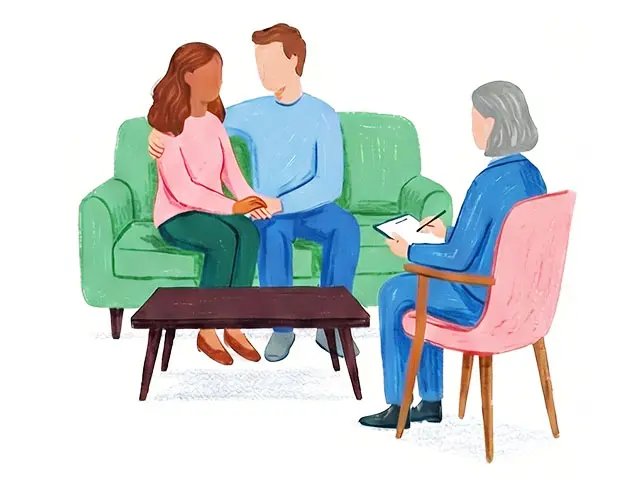
What forms of interpersonal therapy are used?
Interpersonal therapy focuses on relationships and social roles as they relate to mood. The focus chosen depends on the difficulty most closely linked to the onset of your symptoms.
- Grief and Loss Work
- Role Transitions
- Role Disputes
- Communication Analysis
- Building Social Support
- Relapse Prevention
What is interpersonal therapy?
Understanding the therapy
Interpersonal therapy is a structured, time-limited treatment based on the link between mood and relationships. It addresses grief, disputes, life changes, and social isolation. It is commonly used for:
By improving relationships and social support, interpersonal therapy reduces depressive symptoms and helps prevent recurrence. It is practical and focused on the present rather than the distant past.
Benefits of interpersonal therapy
Interpersonal therapy has good evidence for depression, particularly where symptoms are linked to bereavement, relationship conflict, or a major life change.
Symptom Relief
Reduce anxiety, low mood, and emotional distress, making daily life feel more manageable.
Better Daily Functioning
Strengthen coping skills, focus, and resilience to handle work, study, and responsibilities.
Improved Sleep and Health
Reduced tension often improves sleep, appetite, and general physical wellbeing over time.
Stronger Relationships
Develop clearer communication, set boundaries, and build more supportive connections.
Some signs that support may help
Early signs that should not be ignored
- Persistent worry or low mood
- Difficulty sleeping
- Loss of interest in daily activities
- Difficulty concentrating
- Withdrawal from family and friends
- Irritability or anger outbursts
- Changes in appetite or weight
- Reliance on alcohol or substances
Hear from our clients
Stories of transformation
Garima Mundra
Vaibhav Maheshwari
Abhishek Malviya
Sanidhya Gupta
Swathi Vishwas
Aditya Koolwal
Frequently
Asked Questions
Questions we are often asked
Q1: Who can benefit from interpersonal therapy?
It suits people whose low mood is linked to bereavement, relationship conflict, a major life change, or social isolation.
Q2: How long does it last?
It is a time-limited therapy delivered over a defined number of sessions, with progress reviewed throughout.
Q3: What happens in a session?
Sessions examine recent interactions and their effect on mood, and identify clearer ways of communicating and resolving difficulties.
Q4: How is it different from CBT?
CBT focuses primarily on thoughts and behaviour, while interpersonal therapy focuses on relationships and social roles as they affect mood.
Q5: Can it be combined with medication?
Yes. For moderate to severe depression, therapy and medication together are often more effective than either alone.